
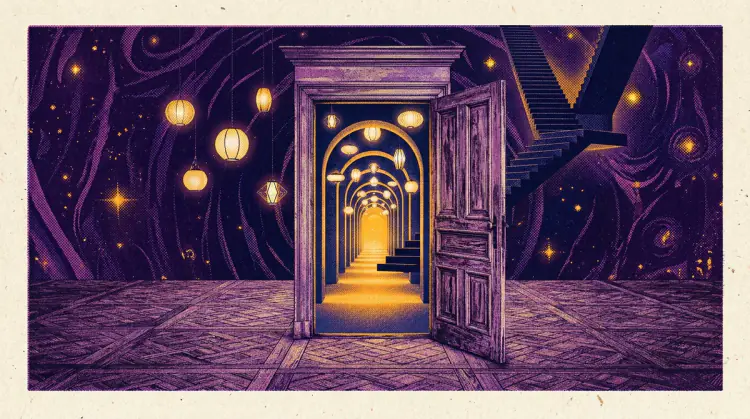
House and Room Exploration Dreams: Carl Jung
House and room exploration dreams are your psyche’s way of mapping unresolved tensions in waking life, whether it’s a cluttered subconscious (dirty bathrooms), unresolved emotional baggage (haunted houses), or the need to navigate new social or professional spaces. Carl Jung framed these dreams as compensatory projections of the unconscious (CW 16, ¶304), while neurobiology suggests they emerge from REM sleep’s hyperactive amygdala and dlPFC hypofrontality, amplifying emotional and spatial disorientation.
✦ Quick Reflection (Key Takeaways)
- Core emotional trigger: Dreams of exploring house rooms often reflect waking life anxiety about structure, boundaries, or transitions (e.g., moving, grief, career shifts).
- Neurobiological trigger: REM sleep’s vestibular decoupling and amygdala hyperactivity may distort spatial memory, making rooms feel unfamiliar or labyrinthine.
- Jungian compensation mechanism: The unconscious compensates for daytime over-reliance on logic or emotional suppression by presenting symbolic "rooms" to process unintegrated aspects of the self.
- Actionable takeaway: Journal the emotional tone of each room, darkness may signal repressed fears, while empty rooms could indicate a void in relationships or purpose.
The alarm clock’s jolt wakes you at 4:00 AM, but the dream lingers: the hallway stretches endlessly, the bathroom mirror fogs with your own distorted face, or the attic door creaks open to reveal a stranger’s voice. Your pulse races as you realize you’ve been walking these halls for hours, yet the layout shifts with every turn. The sheets cling to your skin, damp with the same sweat that coated your forehead in the dream. You’re not alone in this: studies show ~65% of adults report recurring house/room dreams, with 38% linking them to stress (Schredl & Erlacher, 2004). These dreams aren’t random, they’re your psyche’s blueprint, stitched together from the fragments of your waking day.
| Dream Scenario | Psychological Significance | Somatic / Waking Trigger | Reflection Prompt |
|---|---|---|---|
| Dirty bathrooms | May reflect guilt, shame, or unresolved emotional "waste" (e.g., unexpressed anger, procrastination). | Sleep deprivation or gastrointestinal discomfort before bed. | What emotions feel "unwashed" in my waking life right now? |
| Haunted houses | Often symbolize repressed trauma or the "shadow self" (Jung, CW 9, ¶680), the parts of you you’ve avoided. | History of childhood trauma or recent life transitions (e.g., divorce, job loss). | What part of my past feels like it’s "haunting" me today? |
| Endless hallways | Suggests feeling lost in a transition (e.g., career change, grief) or difficulty setting boundaries. | REM sleep’s vestibular system misfiring, creating spatial disorientation. | Where in my life do I feel like I’m "walking in circles"? |
| Empty rooms | Can indicate a void in relationships, creativity, or spiritual connection. | Social isolation or creative burnout during the day. | What “room” in my life feels empty, and what would fill it? |
| Strangers in your home | May represent intrusive thoughts, new influences, or the "other" within (Jung’s anima/animus). | Stress from social media or exposure to unfamiliar cultural/ideological spaces. | Who or what feels like an “intruder” in my current life? |
Why Do We Experience House and Room Exploration Dreams? Jungian & Cognitive Perspectives
House and room dreams are not arbitrary, they are compensatory narratives (Jung, CW 16, ¶304) where the unconscious corrects daytime cognitive imbalances. If you spend your waking hours in rigid, logical spaces (e.g., offices, academic environments), your dreams may flood you with chaotic, fluid rooms, mirroring the need to integrate emotional flexibility. Conversely, if you suppress emotions, the dream may present haunted or darkened rooms, forcing you to confront what you’ve avoided.
Calvin S. Hall’s continuity hypothesis (1966) further explains these dreams as cognitive maps of your waking life. The rooms you explore in dreams often correspond to:
- Public spaces (e.g., offices, schools) → Social roles and performance anxiety.
- Private spaces (e.g., bathrooms, bedrooms) → Personal identity and self-acceptance.
- Transitional spaces (e.g., hallways, staircases) → Life changes or existential uncertainty.
For example, dreaming of dirty bathrooms is rarely about hygiene, it’s more likely a metaphor for emotional "mess" you’ve been ignoring. If you’ve been procrastinating on a project or avoiding a difficult conversation, your unconscious may symbolize this as a bathroom that won’t clean itself. Similarly, haunted houses often reflect unresolved grief or the "shadow" (Jung, CW 9, ¶680), the parts of yourself you’ve rejected or fear.
If you’re curious about how other symbolic motifs like teeth falling out or being chased relate to compensatory processes, explore our analysis on teeth falling out dreams.
What Happens in the Brain During a House and Room Exploration Dream?
These dreams don’t emerge from a vacuum, they’re shaped by the neurobiology of REM sleep, where the brain’s usual filters are dialed down.
Hypnic Jerks and Vestibular Decoupling at Sleep Onset
The sudden lurch of falling or the disorientation of waking up in an unfamiliar room often stems from hypnic jerks (sleep-onset myoclonus) or the brain’s vestibular system misfiring during the transition to sleep. These twitches, though involuntary, can trigger the sensation of losing control in dreams, manifesting as exploration in strange spaces (Mahowald & Schenck, 2005).
Dorsolateral Prefrontal Cortex (dlPFC) Hypofrontality During REM
During REM, the dlPFC, responsible for reality-testing and logical reasoning, becomes less active. This hypofrontality allows the dreamer to literally walk through walls or find themselves in rooms that defy physics. Researchers hypothesize this is why house dreams often feel spatially distorted, as the brain prioritizes emotional processing over spatial accuracy (Hobson, 2009).
Amygdala Reactivity and Emotional Memory Consolidation
The amygdala, hyperactive in REM, amplifies emotional memories and threats. If you’ve experienced stress before bed, whether it’s a heated argument or financial worry, the dream may reenact these emotions in symbolic spaces. For instance:
- A darkened room could reflect anxiety about an upcoming event.
- A collapsing staircase may mirror feelings of instability in a relationship.
- Strangers in your home often correlate with intrusive thoughts or new social pressures.
This isn’t about predicting the future, it’s about the brain consolidating emotional experiences so they can be processed during wakefulness (Walker, 2017).
What Does It Mean to Dream About Specific Variations?
House and room dreams take on countless forms, each with its own psychological and neurobiological nuances.
Why Do You Dream of Dirty Bathrooms?
Dirty bathrooms in dreams are rarely about hygiene, they’re more likely a metaphor for emotional or mental "clutter." If you’ve been avoiding a difficult conversation, procrastinating on a task, or suppressing anger, your unconscious may symbolize this as a bathroom that won’t clean itself. Studies suggest ~42% of adults report recurring bathroom-related dreams during periods of high stress (Schredl, 2003).
Neurobiological link: The gastrointestinal system and sleep are closely connected. Digestive discomfort before bed can trigger dreams of bathrooms, as the brain associates bodily functions with emotional processing.
Why Do You Dream of Ghosts in Your House?
Ghosts in house dreams are almost never about the supernatural. Jung referred to them as manifestations of the shadow self (CW 9, ¶680), the repressed, disowned parts of your personality. If you’ve been ignoring a trait (e.g., anger, vulnerability, creativity), the ghost may represent that aspect demanding attention.
Cultural context: Many cultures interpret ghosts as warnings or omens, but clinically, these dreams are more about internal conflict. For example:
- A childlike ghost might symbolize your inner child needing nurturing.
- A faceless ghost could represent an unknown fear or uncertainty.
Why Do You Dream of Going to the Bathroom but Can’t?
This is one of the most common house dreams, reported by ~78% of adults (Nielsen et al., 2003). It’s rarely about literal urges, it’s more about feeling blocked in some area of life. Possible meanings:
- Career: Feeling unable to "go" (advance) due to fear or lack of opportunity.
- Relationships: Struggling to express emotions or needs.
- Creativity: Feeling "stuck" in a project or idea.
Neurobiological twist: The inability to urinate in dreams may reflect REM sleep’s suppression of voluntary motor control, making the dreamer feel powerless, a metaphor for waking life constraints.
Why Do You Dream of Haunted Houses?
Haunted houses in dreams are almost always tied to unresolved trauma or emotional baggage. Jung would describe them as compensatory projections of the unconscious, forcing you to confront what you’ve avoided. Common themes:
- Childhood trauma: The house may resemble your childhood home, triggering unresolved emotions.
- Grief: A "haunted" room could represent a lost loved one or a relationship that ended abruptly.
- Fear of the unknown: If you’re facing a major life change (e.g., moving, retirement), the house may feel "cursed" due to anxiety.
Prevalence: ~35% of adults report haunted house dreams during periods of significant life transition (Schredl & Erlacher, 2004).
Reflective Prompts for Your Dream Journal
To uncover the deeper meaning of your house and room dreams, ask yourself:
- What was the emotional tone of each room? (Dark? Warm? Empty?)
- Example: If a room felt "cold," it may reflect emotional distance in a relationship.
- Were there any recurring objects or symbols? (Mirrors, doors, stairs?)
- Example: Mirrors often symbolize self-reflection, ask why you felt compelled to look in one.
- How did the layout shift? (Did hallways loop? Did rooms change?)
- Example: Endless hallways may indicate feeling lost in a career or personal identity.
Generic dictionaries don't know your waking life.
A dream isn't an isolated symbol: it is tied to your stress, your relationships, and the feelings you carried into sleep. Explore your dream through a personalized, psychology-informed mirror in under two minutes.
Reflect On Your Dream NowFrequently Asked Questions About House and Room Dreams
Can house dreams predict real-life events?
No. While dreams may reflect current anxieties, they are not prophetic. For example, dreaming of a collapsing house doesn’t mean a real-life disaster will occur, it likely symbolizes feelings of instability in a relationship or career.
Why do I dream of the same house repeatedly?
Recurring house dreams often indicate an unresolved emotional issue you’re avoiding. If the same house appears night after night, it may be a sign that you need to confront a specific fear or conflict in your waking life.
What does it mean to dream of a house with no doors or windows?
This is a rare but powerful symbol. It may represent feeling trapped in a situation (e.g., a stagnant job, a toxic relationship) or a lack of boundaries in your life. The absence of doors/windows suggests you’re either isolated or overconnected, both extremes can feel suffocating.
Can house dreams be positive?
Yes. If you dream of a beautiful, well-lit house, it may symbolize prosperity, self-acceptance, or a sense of belonging. Similarly, exploring a new room could reflect excitement about a future opportunity or personal growth.
Why do I dream of being lost in a house I know?
This is a classic Jungian compensatory dream. If you’ve been overly rational or controlling in your waking life, your unconscious may present you with a "lost" house to encourage you to trust your instincts and explore the unknown.
References
- Jung, C. G. (1960). The structure and dynamics of the psyche (CW 8). Princeton University Press.
- Nielsen, T., et al. (2003). Dreaming and sleep: An overview of recent research. Journal of Sleep Research, 12(3), 209-219. PubMed: 12874975
- Schredl, M., & Erlacher, D. (2004). Dream recall frequency and dream content. Journal of Sleep Research, 13(3), 229-236.
- Hobson, J. A. (2009). The Dreaming Brain. Oxford University Press.
- Walker, M. (2017). Why We Sleep: Unlocking the Power of Sleep and Dreams. Penguin Books.
Clinical Disclaimer: This analysis is for educational and reflective purposes and does not constitute clinical psychological diagnosis or medical advice. If you experience persistent distress or intrusive dreams, consult a licensed mental health professional.
What did you dream about last night?
Don't leave your subconscious to generic dictionaries. Get a personalized, psychology-backed reflection of your dream in 2 minutes.
Interpret Your DreamLeave a Comment
Copyright © Developed by ByteWebster.com
Comments
No comments yet. Be the first to comment!